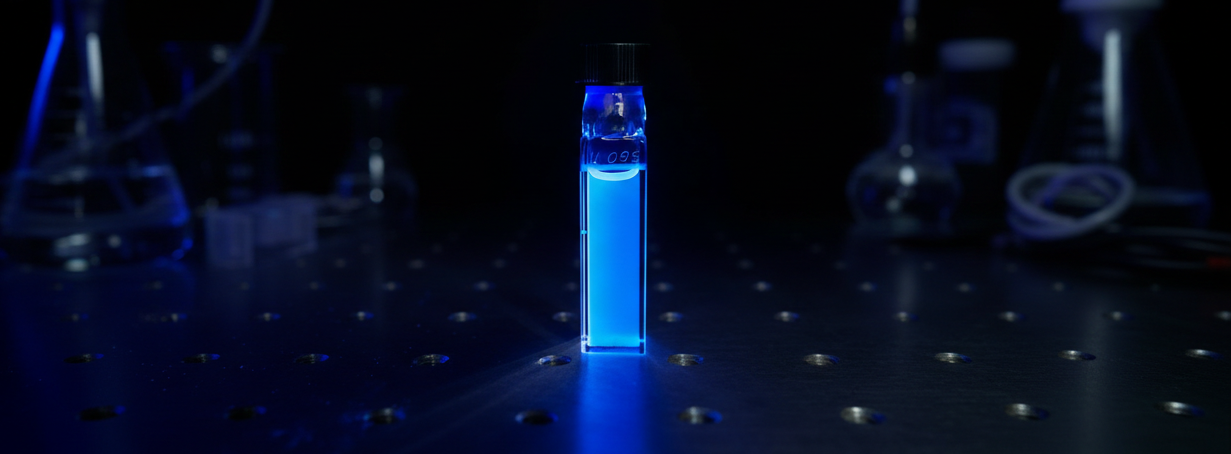
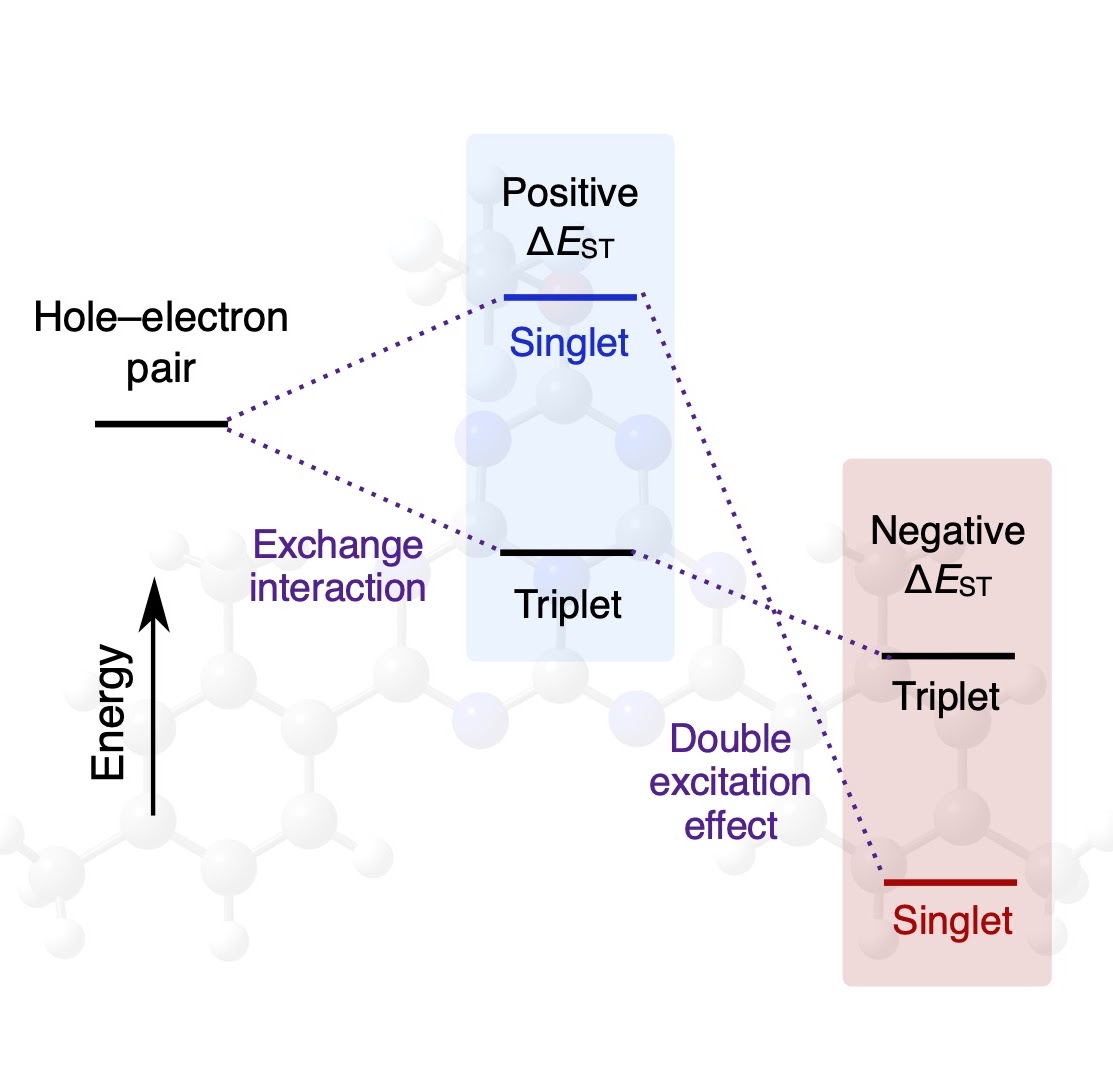
We pioneer the design and synthesis of molecules with inverted singlet and triplet excited states (IST), where the lowest triplet state lies energetically above the lowest singlet state, violating the famous Hund's rule.
This unusual electronic structure enables highly efficient organic light-emitting diodes (OLEDs) by facilitating rapid reverse intersystem crossing and eliminating triplet-related efficiency losses.
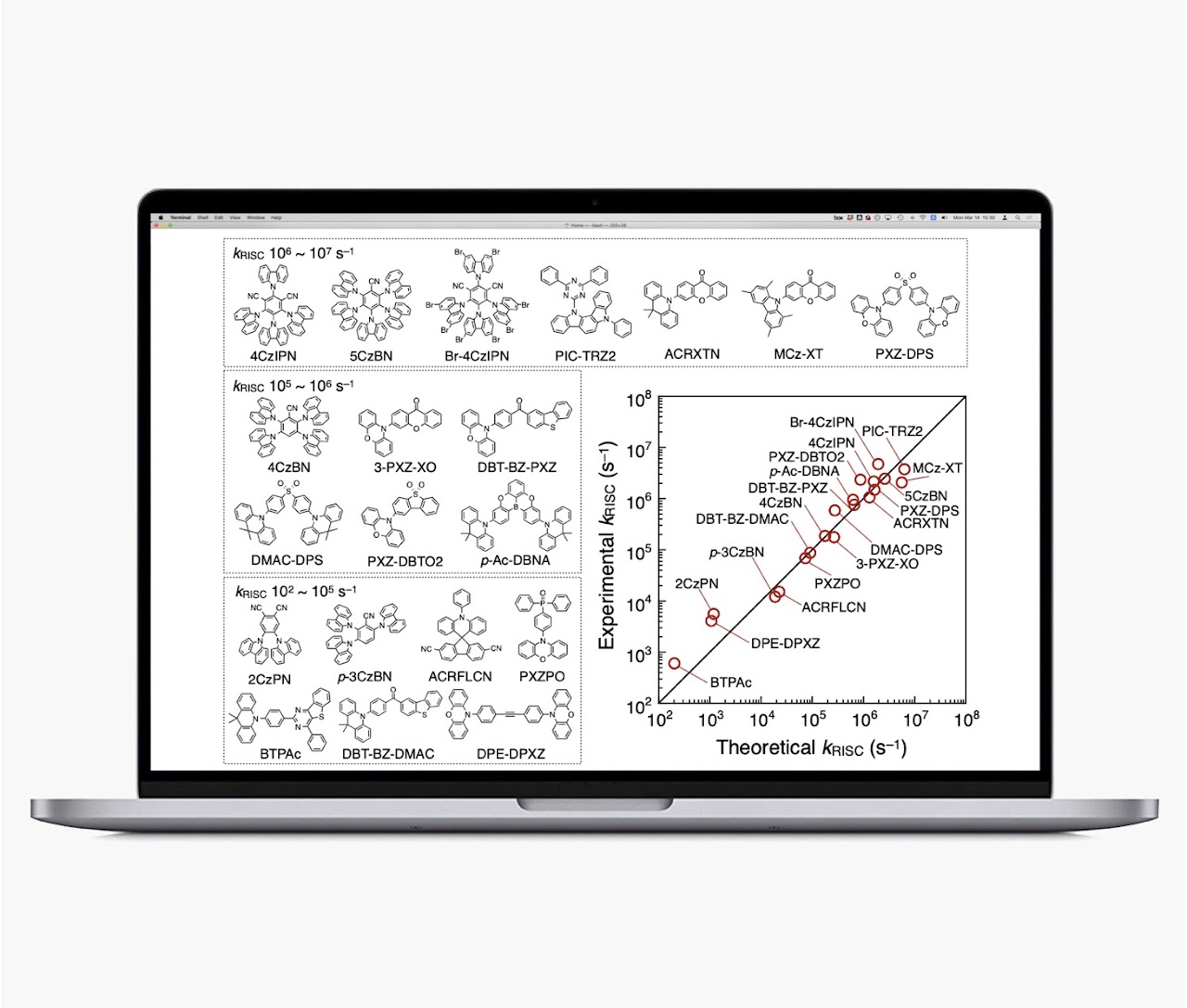
We develop geometry optimization and exploration methods on excited-state potential energy surfaces to predict intersystem crossing and reverse intersystem crossing rates in organic molecules.
By combining quantum chemical calculations with machine-learning approaches, we accelerate the discovery of molecules with targeted photophysical properties, reducing trial-and-error in experimental synthesis.